Web platform · in development
← All workGBR
Clients, materials and commercial terms connected to prepare foreign trade simulations and quotations.
Web application · desktop and mobile access

The problem
Work moves forward. Context gets lost.
In the workflow described by the project, sales, operations and billing rebuilt information in separate spreadsheets. Clients, terms and estimates had to be reconciled at each handover. GBR starts by organising that commercial context.
- Sales
- Operations
- Billing
First step: connect clients, materials and negotiations.
The product
Each record prepares the next action.
The client portfolio, negotiations and materials catalogue form a connected workspace. A grade — a record of a material and its characteristics — can start a commercial draft or prepare a quotation using existing relationships.
Find the client
Search, filters and a quick view help navigate the portfolio and open a negotiation's context.
Reuse terms
A negotiation stays linked to its client. Currency and delivery terms can be reused when creating a draft if available.
Start with the material
Grade details connect materials, suppliers and approved clients to related commercial actions.

How it works
Start with what is known. Complete it when ready.
A commercial simulation can start with a few fields. The user chooses a client, adds a negotiation if available, saves the draft and returns to complete its information and commercial status. Context is recorded before every detail is settled.
- Client or material
- Negotiation
- Save draft
- Reopen and complete
Desktop interface / swipe to inspect
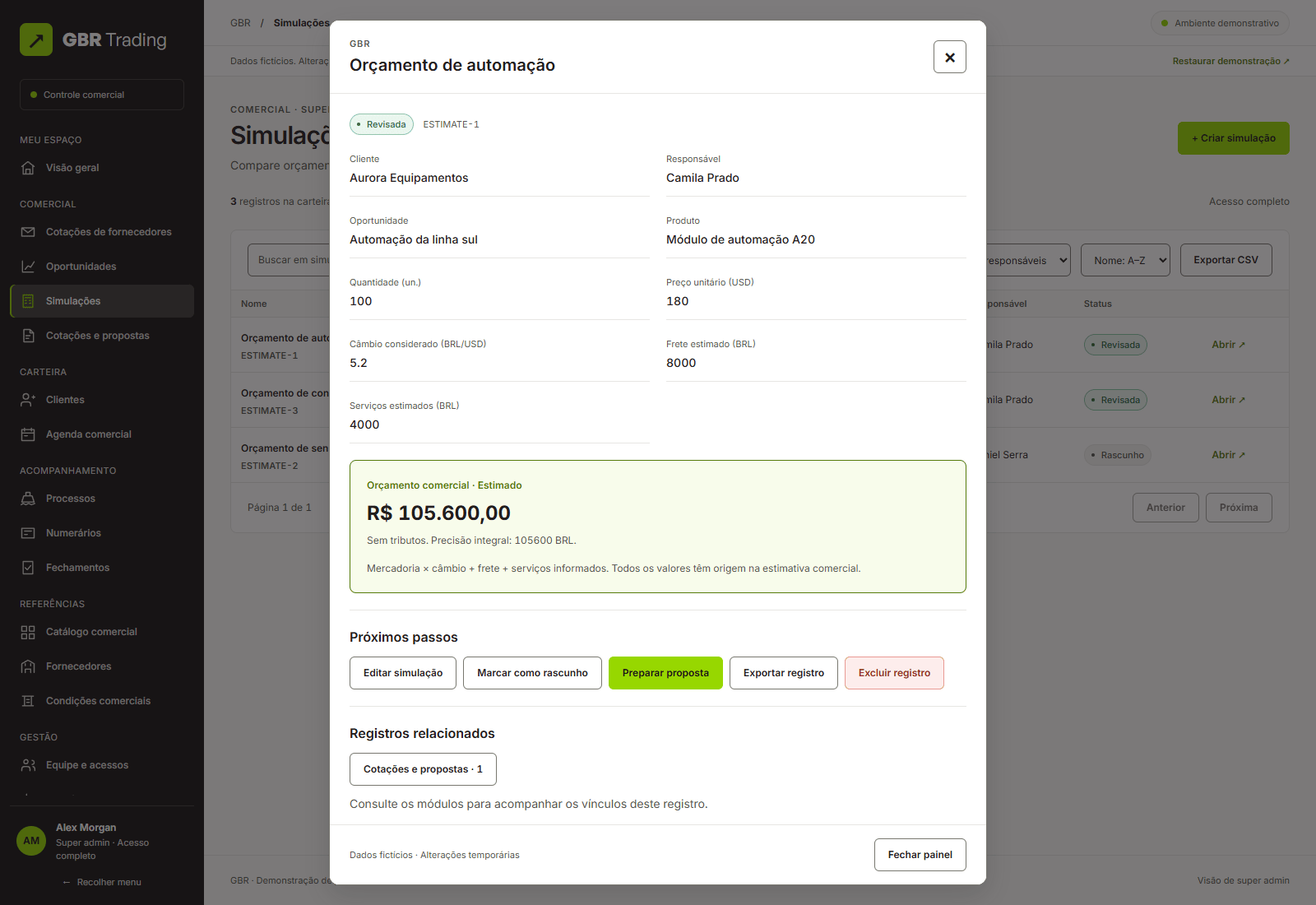
This workflow records commercial context. The tax calculation engine is not yet implemented.
Commercial communication
From an existing relationship to a reviewed message.
Starting from a grade, GBR suggests suppliers associated with the material or clients with compatible negotiations and approvals. The composition workflow lets users review recipients, subject and message before confirming a quotation request or offer.
Contextual suggestions
Existing commercial relationships guide selection; the user reviews recipients and completes the required addresses.
Result per recipient
The code records each attempt's result. An overall sent status is not treated as proof of message delivery.
Desktop interface / swipe to inspect
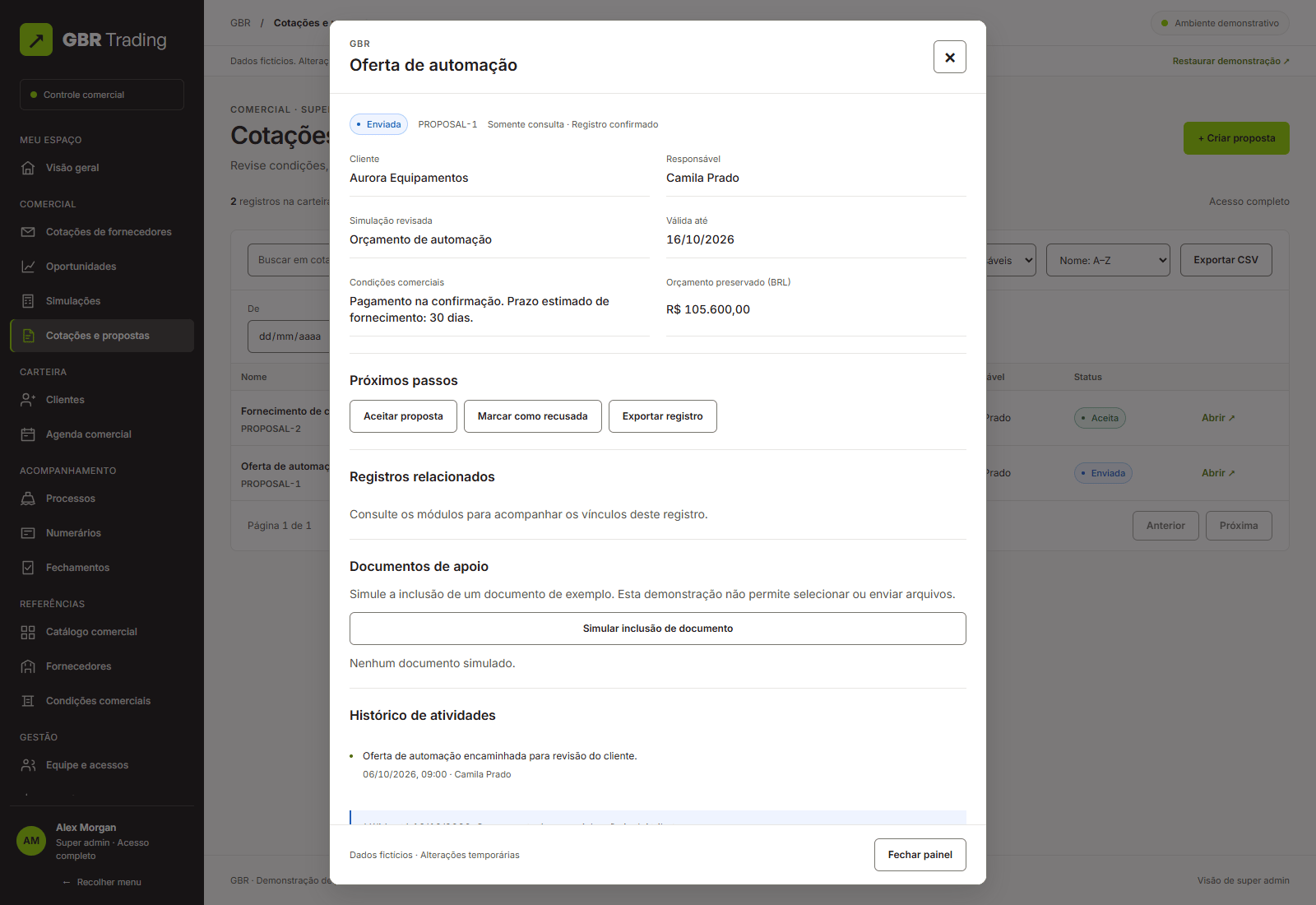
Email transport depends on configuration. External sending and delivery were not tested in the audit.
Product decisions
Move forward while keeping information trustworthy.
The priority documented in August 2026 was to validate the commercial journey first. Tables and saved context bring the experience closer to spreadsheet workflows, while access and responsibility follow each person's work.
Consistent context
Changing the client clears the selected negotiation. Available terms belong to the chosen client.
Access based on the task
Profiles, capabilities and assigned owners organise browsing and actions. Choosing a dashboard changes the experience without granting additional permissions.
Explicit unavailability
When no approved calculation rule exists, the application shows unavailability instead of presenting totals without a validated basis.
Technology
A foundation for keeping work connected.
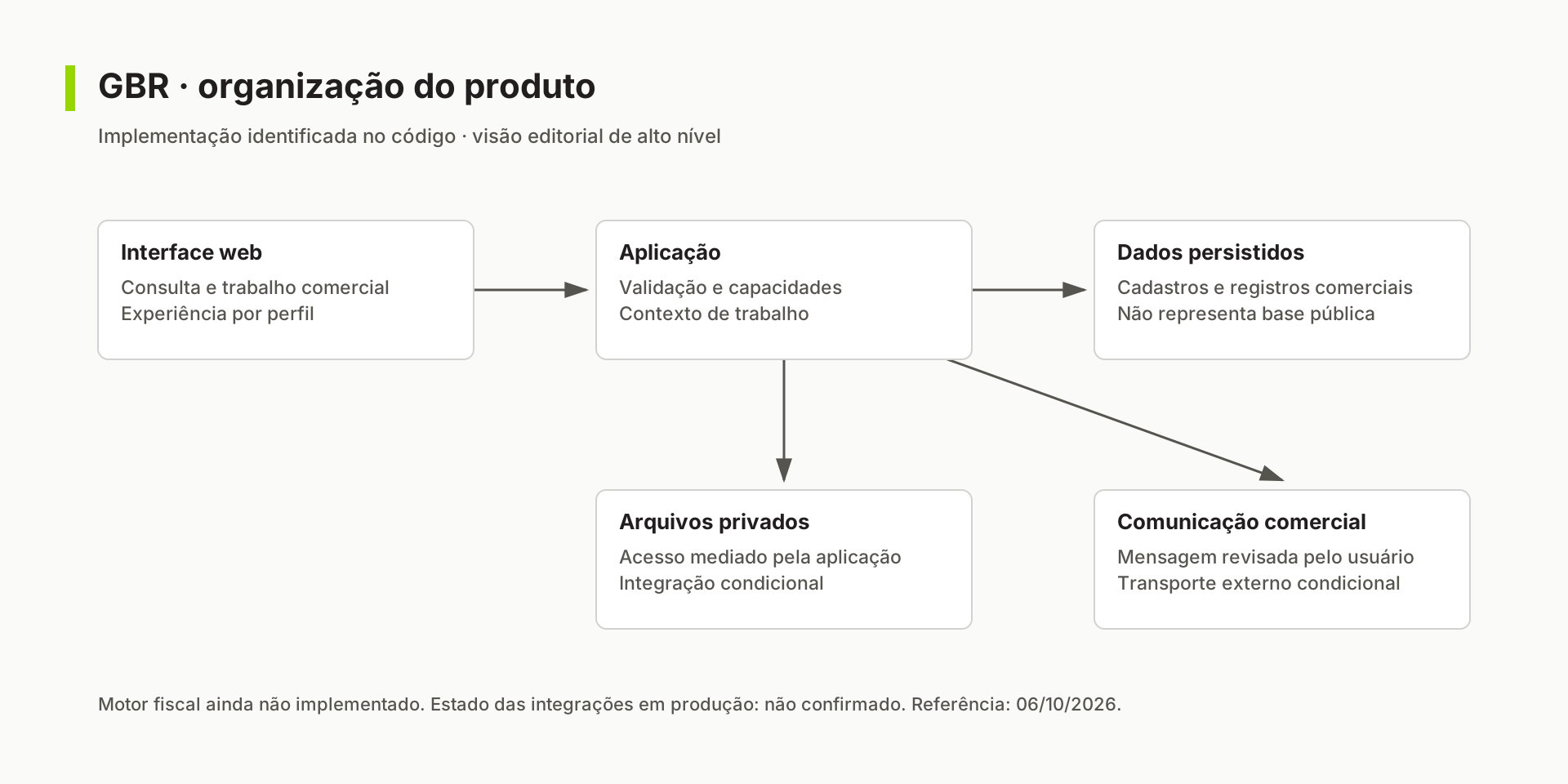
React and Next.js provide the interface and application services. TypeScript organises contracts between these parts; PostgreSQL stores commercial records, and Neon Auth integrates authentication. Private files and commercial communication have dedicated integrations whose operational availability is not yet confirmed.
Desktop interface / swipe to inspect
Current stage
The commercial journey is the first step.
The audited version brings together connected records, saved drafts, quotation preparation, process browsing and access administration. Continuity across tax calculation, operations, finance and closing remains the product direction, with later modules still partial or planned.
Stack
TypeScript · React · Next.js · PostgreSQL · Neon Auth
The original product narrative follows documentation and an audit dated 6 October 2026. Workspace captures were supplied later and show an independent demonstration with fictional data; they do not establish additional features in the original. Publication, adoption and business results have not been confirmed.
Next projectTREVOX LAB ↗